Padma Asana (Lotus Pose)
Asana For Pranayama And Meditation
Padma Asana is also known as lotus pose. In Sanskrit, "Padma" means "Lotus". In this pose, body takes the shape of a lotus. This is the recommended asana for meditation and Pranayama. Remember these yoga tips before starting yoga.
Steps For Padma Asana
- Sit on your yoga mat or a carpet and spread both legs forward.
- Bend the right knee at knee joint. Hold the right foot with both hands (hold ankle of right leg with right hand and catch the toes of right leg with the left hand). Lift the right foot upwards and place it on the left thigh, so that your right heel is as close as possible to your navel.
- Now bend the knee of the left leg. Hold the left foot with both hands (hold ankle of left leg with left hand and catch the toes of left leg with the right hand. Lift left foot and fix the left heel at the base of right thigh.
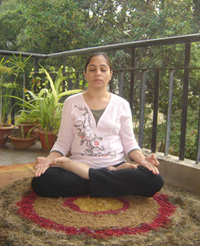
- Both knees should be on the ground and the soles of the feet should point upward.
- The position of the legs may be switched after a period of time if the posture becomes uncomfortable.
- Keep your neck and back straight.
- Keep your eyes closed.
- Keep both the hands on your knees in position of gyan mudra(Touch the index finger with tip of the thumb, keeping three other fingers straight).
Practice
In the beginning, do this for half a minute and then slowly extend the duration of this asana. Yogis do tapasya (meditation) in padma asana for hours. If you are not able to do padmasna, keep on practicing ardh padmasana and other asanas. Gradually your flexibility will improve and you will be able to do padmasana.
Benefits
- Padmasana strengthens digestive power, removes constipation and improves appetite.
- It removes diseases of heart and strengthens the muscles of the waist and lower limbs.
- Regular practice brings peace of mind.
Caution
- If your body is not flexible, padmasana is a difficult asana for beginners.
- Do not try to do it forcefully. Instead practice ardh padmasana (first half part of the asana) ie place your right foot on left thigh. Make your legs straight, repeat by placing your left foot on right thigh.
- Home ›
- Yoga Poses ›
- Padmasna
Recent Articles


-
Online Healing Yoga Consultation for Holistic Health Management
Jan 07, 22 02:05 PM
Healing Yoga Consultation by an experienced yoga therapist -
Online Yoga Classes for Yoga Asanas, Pranayama and Meditation
Jun 06, 21 01:39 PM
Online Yoga Classes by an Experienced Yoga Therapist -
Drinking 1.2 liters of water in empty stomach to clean the bowels is it correct and safe in long run
Oct 20, 20 03:25 PM
Namaskar, Daily morning in empty stomach I am drinking 1.2 liters of water then waiting for 45 minutes, then only able to go toilet but without any strain.
New! Comments
Have your say about what you just read! Leave me a comment in the box below.